The Emotional Benefits of Dental Implants
Tooth loss is usually discussed as a functional problem. People talk about chewing, speech, bone support, and the mechanics of replacing what is missing. All of that matters. But in practice, the emotional weight is often heavier than the physical inconvenience.
A missing tooth, or several missing teeth, can change the way a person enters a room. It can alter how long they hold eye contact, whether they laugh freely, and how they feel during ordinary moments such as ordering lunch, posing for a photo, or speaking up in a meeting. For many adults, the hardest part is not pain. It is self-consciousness. It is the quiet habit of covering the mouth with a hand, smiling with lips closed, or declining social invitations because eating in public feels stressful.
Dental Implants often improve far more than a bite. They can restore a sense of ease that many people did not realize they had lost.
Why the emotional side deserves more attention
Patients do not always say, “I’m here because I feel less like myself.” They are more likely to mention a broken bridge, a loose denture, or trouble chewing steak. Yet if you spend enough time listening, another story usually emerges underneath the practical complaint.
A man in his early fifties may explain that he stopped joining his friends for dinner because he is tired of worrying that his denture will shift when he talks. A woman who lost a front tooth after trauma may insist she is “fine,” then admit she has not smiled in family photos for two years. Someone who has worn a partial denture for a decade may describe constant low-grade embarrassment, not because the appliance looks terrible, but because they never fully trust it.
These experiences matter because confidence is not superficial. It shapes behavior. When people feel secure in their appearance and comfort, they tend to speak more freely, eat more normally, socialize more naturally, and carry less tension through the day. Dentistry affects the face, the mouth, and the voice, so it reaches directly into a person’s identity. That is why replacing missing teeth can have such a strong emotional effect.
The hidden strain of living with missing teeth
People adapt quickly. That can be a strength, but it can also hide the depth of the problem. Someone may get used to chewing only on one side, avoiding crusty bread, smiling carefully, and choosing seats in dim lighting. Over time, those adjustments start to feel normal. The emotional burden becomes background noise.
That Dental Implants background noise often includes shame, even when there is no reason for it. Tooth loss can happen because of injury, genetics, grinding, gum disease, past medical issues, or dental history that began long before someone had the money or support to address it properly. Still, many people internalize it as a personal failure. They imagine others are judging them more harshly than they are.
There is also the fatigue of constant vigilance. Removable appliances can work very well for some people, but they may require adhesive, special cleaning routines, or mental monitoring during meals and conversations. Even fixed options such as bridges can leave a person aware that the solution has limits. When someone is always managing the situation, emotionally or physically, they rarely feel fully at ease.
Dental implants can reduce that sense of management. That shift, from coping to feeling restored, is where much of the emotional benefit begins.
What feels different about implants
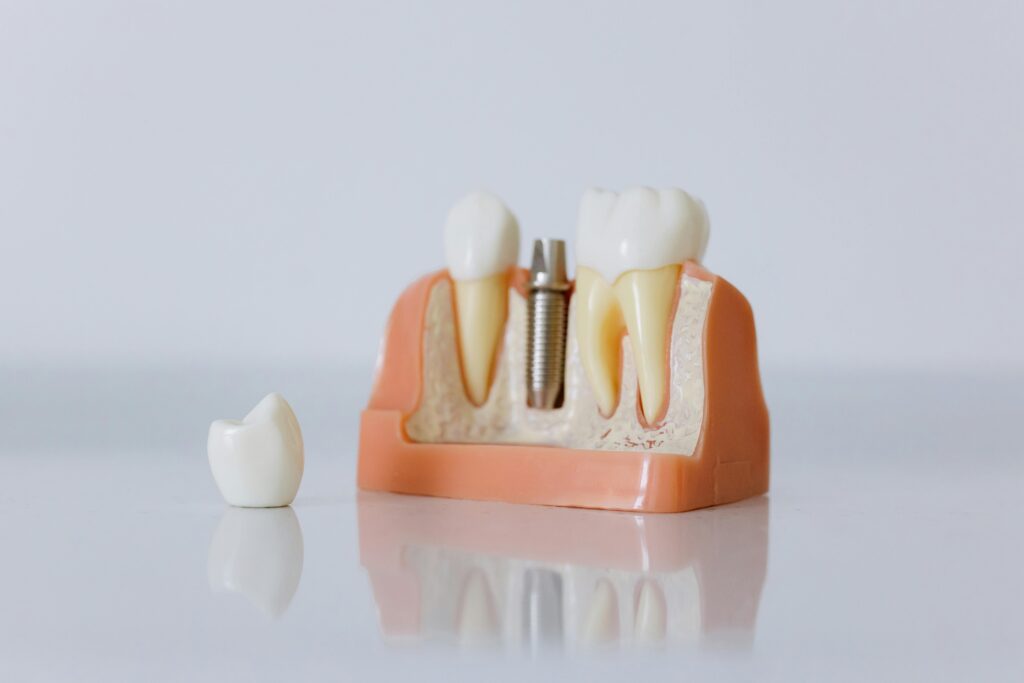
An implant-supported tooth is not identical to a natural tooth in every possible way, but many patients experience it as the closest thing to getting part of themselves back. That reaction has less to do with vanity than with stability.
When a replacement tooth feels secure, people often stop thinking about it. They bite into food without rehearsing the movement. They laugh without checking whether their lips are covering the right area. They speak without the slight mental delay that comes from monitoring a prosthesis. This reduction in self-monitoring can be deeply relieving.
With removable dentures, even excellent ones, there can be moments of awareness. Some patients are comfortable with that trade-off, and for them dentures remain a sensible solution. But for others, the movement, bulk, or daily maintenance keeps the tooth replacement psychologically “present.” Implants tend to fade into the background of life. That is a powerful emotional difference.
There is also the matter of permanence. People often describe an implant restoration as feeling more like a real part of their mouth rather than something they put in or take out. That psychological distinction should not be underestimated. It changes the relationship a person has with their own reflection.
Confidence is often the first benefit people notice
Many patients expect the main payoff to be function. Then they are surprised that confidence returns first.
This can show up in ordinary places. A patient who had avoided video calls may suddenly stop angling the camera away from their mouth. A parent who had always smiled tightly in school pictures may grin openly without thinking about it. A retiree who wore a loose lower denture for years may start going back to lunch with friends because the fear of slipping or clicking is gone.
These moments are small on paper. In real life, they are not small at all.
Confidence after Dental Implants is not always dramatic or immediate. Some people feel emotional the day the final restoration is placed. Others adjust gradually and realize months later that they no longer organize their behavior around their teeth. Both responses are common. Emotional change does not follow a tidy schedule.
It is also worth noting that confidence can improve even when the visible change seems modest to others. A gap in a back tooth area may not be obvious in photographs, but the person living with it knows exactly where it is. They know how it affects chewing, how their tongue finds the space, how their face feels when they talk. Replacing that tooth can bring a strong sense of completeness even if no one else ever comments on it.
Relief from embarrassment around eating and speaking
Meals are social events as much as nutritional ones. When dental problems interfere with eating, people often lose more than convenience. They lose spontaneity.
Anyone who has struggled with unstable dentures or significant missing teeth knows the tension that can build around restaurant menus. Hard crusts, seeded bread, salads, chewy meats, apples, nuts, even certain pastas can become sources of anxiety. Some people start choosing food based on safety rather than enjoyment. Others eat before they go out so they can pick at a meal without drawing attention.
Speech can become another source of stress. Missing teeth, especially in visible areas or areas that influence tongue placement, may affect pronunciation or create a feeling of insecurity when speaking quickly. Public-facing professionals often feel this intensely. Teachers, salespeople, managers, and customer service workers may become more guarded in conversation, not because they cannot speak, but because they are acutely aware of how their mouth feels.
Dental implants often help Dental Implants restore confidence in both settings. The emotional gain comes from trust. Trust that the teeth will stay where they should. Trust that speaking will feel natural. Trust that a person can order, bite, chew, laugh, and converse without managing every second.
That trust can lower social anxiety in a very direct way.
The impact on self-image and identity
Teeth are tied to self-image more closely than many people realize until something changes. They affect facial support, the shape of a smile, and the expressions a person uses instinctively. When teeth are missing for a long time, some people begin to feel older than they are. Others feel less polished, less healthy, or less recognizable to themselves.
This is especially true after sudden tooth loss from trauma. An accident can create not only a dental problem but also a rupture in identity. Patients sometimes describe looking in the mirror and seeing a stranger, or seeing the event itself every time they notice the gap. In those cases, treatment is not just replacement. It can be part of emotional recovery.
For people who have lived with tooth loss for years, the identity shift is different but still profound. They may have built habits and social armor around the issue. An implant restoration can feel unexpectedly emotional because it removes a defense mechanism they have carried for a long time. It is not unusual for someone to become tearful after seeing their final result, not because the tooth is perfect in some cosmetic sense, but because they feel recognizable again.
There is also dignity in being able to care for the mouth in a way that feels straightforward and familiar. Brushing and flossing around a well-designed implant restoration is not the same as caring for a removable appliance. For many patients, that routine contributes to a renewed sense of normalcy.
Security matters more than many people expect
People often underestimate how much emotional comfort comes from physical stability. Security is a practical term, but it describes a feeling as well.
A secure tooth replacement reduces background worry. There is no need to think about whether something will slip during a conversation or whether a meal will turn awkward. That mental quiet can be transformative, especially for people who have spent years making subtle adjustments to hide discomfort.
This is one reason lower dentures are such a common source of frustration. Because the lower arch generally has less surface area and different muscle dynamics than the upper arch, a lower denture can be harder to keep stable. Some patients do manage very well with one, but many do not. Even a small amount of movement can create disproportionate emotional distress because the person never feels fully safe in social situations.
Implant support in the lower jaw often changes that experience dramatically. Whether through a single-tooth implant, multiple implants, or an implant-retained overdenture, increased stability usually means more than improved mechanics. It often means less fear, less embarrassment, and less daily mental load.
Emotional benefits for younger adults
When people hear about implants, they often picture older patients. In reality, younger adults can feel an especially sharp emotional impact from tooth loss and from the restoration process.
A front tooth lost in sports, a failed root canal from years earlier, congenital absence of a tooth, severe decay in an otherwise healthy-looking smile, these situations can hit hard because they clash with expectations. A person in their twenties or thirties may feel isolated, as though this problem “should not” be happening to them. They may avoid dating, networking, or being photographed. Some become adept at hiding the issue, but the stress remains.
For these patients, Dental Implants can restore a sense of normal progression. Instead of feeling sidelined by a conspicuous dental problem, they can re-engage with work, relationships, and social life without that ongoing distraction.
That said, younger patients also need careful counseling. Timing matters, especially if growth is incomplete. Expectations matter too. The emotional desire for a quick fix is understandable, but long-term planning should guide the decision. A good treatment process respects both realities, the urgency of how the patient feels now, and the importance of choosing a durable path.
The emotional arc is not always simple
It would be misleading to present implants as an instant emotional cure. The outcome is often positive, sometimes life-changing, but the path can be demanding.
Implant treatment takes time. Healing periods can stretch over several months depending on extractions, bone grafting, soft tissue management, implant integration, and the final restoration plan. Some patients move through the process confidently. Others feel impatient, vulnerable, or discouraged during the temporary phases. If they have been self-conscious for years, waiting longer can feel difficult even when the plan is sound.
There is also the financial side. Implants are an investment, and the stress of cost is real. People may feel hopeful and anxious at the same time. They may worry about spending the money, choosing the right clinician, or whether the emotional payoff will justify the effort. Those concerns are reasonable, not negative.
In some cases, patients expect the implant to solve every insecurity they have about their smile or face. That is too much pressure to place on any procedure. Implants can replace missing teeth and often improve confidence substantially, but they do not erase broader self-esteem issues, relationship problems, or years of distress overnight. The best outcomes happen when expectations are honest and specific.
An experienced clinician usually recognizes this. The emotional benefit is greatest when the patient understands both the strengths and the limits of treatment.
What supportive care looks like during treatment
The emotional experience of getting implants depends partly on the dentistry and partly on the way the process is handled. Technical excellence matters, of course, but so does communication.
Patients tend to cope better when they know what each phase will feel like, how long it may take, and what temporary compromises are likely. If a front tooth area is involved, conversations about provisional options become especially important because appearance during healing can strongly affect day-to-day comfort. When no one prepares the patient for these in-between stages, anxiety often rises.
Good care also means discussing alternatives without pressure. Some patients are ideal candidates for implants and still choose a bridge or removable option because of health, budget, timeline, or personal preference. That choice should not be framed as failure. Emotional wellbeing improves when people feel informed and respected rather than sold to.
Follow-up matters too. Small adjustments to bite, contours, or hygiene technique can have an outsized effect on confidence. A patient who is afraid to chew on the implant side may simply need reassurance and a careful occlusal check. A patient who feels awkward cleaning around the restoration may relax once shown a practical routine that fits their dexterity and anatomy.
Family, work, and relationships often change with the smile
The emotional benefits of implants rarely stay confined to the mouth. They ripple outward.
At home, people may become more expressive. Partners sometimes notice that the person laughs more easily or no longer turns away during close conversation. Parents may find themselves more present in photos because they are no longer preoccupied with hiding a gap. Grandparents may enjoy meals with family without feeling different or fragile.
At work, the changes can be subtle but meaningful. Someone who speaks for a living may project more confidently. Someone in a client-facing role may stop worrying about what others notice when they talk or smile. Even for people in less public jobs, reduced self-consciousness can free up energy that had been tied up in impression management.
These effects are difficult to measure on a chart, but they are very real in day-to-day life. Confidence influences behavior, and behavior shapes relationships.
When the benefit is less dramatic
Not every patient experiences a sweeping emotional transformation, and that is important to say plainly. Some people are pragmatic. They wanted a stable tooth replacement, they got one, and they move on with their lives. That is a good result.
Others had already adapted well to a bridge or denture and mainly appreciate the functional upgrade. In those cases, the emotional benefit may show up as quiet convenience rather than renewed self-esteem. Less hassle. Less maintenance. Less worry. Still meaningful, just less dramatic.
There are also patients with complex dental histories, advanced gum issues, or aesthetic challenges in the front of the mouth where the result can be very good but not perfect. Experienced clinicians know that “better” is sometimes the right promise, not “flawless.” Emotionally, many patients do very well with that if the expectations are clear from the start. Problems usually arise when marketing language creates an unrealistic image of ease or perfection.
Honest planning protects emotional outcomes as much as clinical ones.
A restored smile can feel like a return to ease
The strongest emotional benefit of Dental Implants is not always excitement. Often it is relief.
Relief from thinking about the missing tooth every day. Relief from the fear that something will move at the wrong moment. Relief from the private embarrassment that has shaped meals, photos, conversations, and confidence. Relief from feeling older, less capable, or less like oneself.
That relief can be quiet. It can arrive in a mirror glance that no longer stings, in a meal finished without strategy, in a laugh that comes out before self-consciousness has time to intervene. Those moments may look ordinary from the outside. For the person living them, they are anything but ordinary.
Teeth do not define a person’s worth, but they do influence how a person moves through the world. When implants are well planned, well placed, and well restored, they often give patients more than replacement. They give back comfort, self-trust, and social ease. For many people, that emotional restoration is the part that lasts with them the longest.
Oaks Dental
5000 Parkway Calabasas Suite 308
Calabasas, CA 91302, United States
+1 818-431-2000
FAQ About Dental Implants
What is the downside of a dental implant?
Implants require surgery and a healing period that can last several months. Possible complications include infection, nerve or sinus injury, damage to nearby teeth and failure to bond with bone. Your dentist should assess your health, bone support and alternatives before recommending treatment.
What do dental implants typically cost?
There is no single price for every implant case. The number of teeth replaced, implant components, final restoration and any grafting or extractions affect the total. Request a written estimate covering every stage and confirm insurance benefits and out-of-pocket costs with the practice.
How long do tooth implants last?
An implant can provide long-term support and may last a lifetime with good oral hygiene and regular dental care, but this is not guaranteed. The crown or other restoration may need replacement sooner. Smoking, gum disease and some health conditions can reduce implant success.